
Field trials found that NPHarvest’s recycled nitrogen and phosphorus nutrients deliver the same performance as commercial ones, producing 30–40% higher yields than unfertilized plots.
NPHarvest, a Finnish cleantech company turning wastewater into raw materials for fertilisers, today announced results from its 2025 cultivation trials showing that recycled nutrients can perform on par with conventional synthetic fertilisers. The field tests, conducted in partnership with the University of Helsinki’s Viikki research farm and verified through Eurofins laboratory analysis, found no measurable difference in yield or nutrient uptake between the company’s recycled nitrogen and phosphorus nutrients and commercial products. The findings mark a major step toward fertiliser circularity, demonstrating that recovered nutrients can replace virgin materials without compromising agricultural productivity.
The findings come at a critical time for Europe’s fertiliser supply chain. In 2024, the EU imported over 6.2 million tonnes of Russian fertiliser – about 22 percent of its total supply – worth more than €2.2 billion. But as of mid-2025, new tariffs were set to rise as much as 100% over the next three years to curb dependence on Russian supply. By proving that recycled nutrients can replace synthetics without yield loss, NPHarvest’s results point to a credible path toward fertiliser independence and a more resilient, circular food system.
“Synthetic nitrogen fertilisers were the essential unlock for global population growth in the 20th century, but the way we make them has huge environmental and geopolitical costs,” said Sara Ikonen, COO of NPHarvest. “These results show that we can meet agricultural demand without depending on fossil-based or imported inputs, and that circular fertilisers can perform just as well in the field as traditional ones.”
The trials used both NPHarvest’s recycled nutrients and conventional mineral fertilisers at equivalent nutrient levels, demonstrating comparable yield and nutrient uptake across all fertilized plots. This confirmed that recovered nitrogen and phosphorus can serve as a true substitute for synthetics.
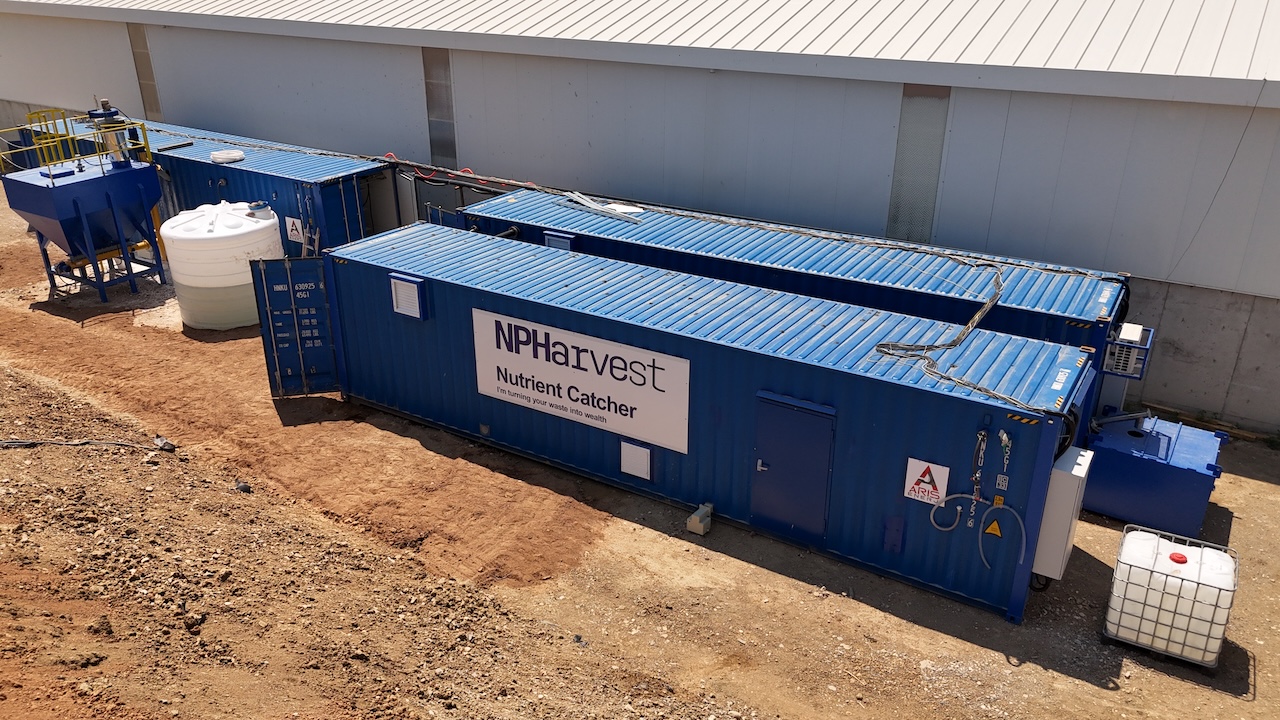
Unlike many nutrient recovery systems that require high energy input, NPHarvest’s chemical process operates at low energy and produces ready-to-use fertilisers directly from wastewater, making nutrient recovery the smartest financial option for the first time. Building on these results, NPHarvest is now preparing for industrial-scale deployment of its modular Nutrient Catcher units.
“These trials confirm that recovered nutrients work in the field,” said Dr. Juho Uzkurt Kaljunen, CEO of NPHarvest. “While they are an important proof-point for our company, I hope that these results encourage the whole society to consider nutrient recovery as a top option to solve many of our pressing issues while reducing costs. The next step is scaling this technology into full commercial operation so that cities and industries can become part of Europe’s fertiliser solution.”
Founded in 2020 as a spin-out from Aalto University’s Water and Environmental Engineering program, NPHarvest is building a new model for sustainable fertiliser production that turns wastewater from a global liability into a renewable resource. Backed by €2.2 million in funding, the company is collaborating with established parties such as ASKİ and Aslan Biomass in Turkey and HSY, the Helsinki Region Environmental Services Authority, to scale its technology for commercial use. Together, these projects demonstrate how local wastewater treatment can become a source of clean, circular fertiliser, helping Europe close the nutrient loop and strengthen the resilience of its agricultural supply chain.
Comments are closed